Will Write for CandySEP 1ST, 2011 BY TALKING WRITING
POSTED IN BOOKMARK, WHY I WRITE
TAGS: EDITING, TEACHING WRITING, WRITER'S BLOCK
By Richard Price
What Readers—Not Teachers—Want
Coming Soon: TW’s Next Issue and “Why I Write”
Happy 1st Birthday, Talking Writing! Next Monday—September 5—we launch a provocative new issue about teaching writing. And in our new bimonthly format, we’ll update the TW site with more pieces every week throughout September and October.
As part of our anniversary celebration, the Sept/Oct 2011 issue will include a selection of “Why I Write” essays. Here Rich Price kicks things off with an unusual form of inspiration….
The contest: Write a two-page short story on the spot, the winner to be decided by fifth graders in Miss Hogan’s class.
"CHOCOLATE" © SALINA HAINZL
The prize: a foot-long Hershey’s bar, compliments of the teacher.
I want to win, but the field is crowded. There are almost 20 entrants, including myself, each with our eyes on the chocolate prize.
I start to write, something about a UFO landing or Bigfoot. I write a page and then stop. I look around the room and realize everyone is writing about UFOs or Bigfoot.
Then I know. This story needs vomit—lots of it.
There is plenty of inspiration. The bug is going around, and last week Brian Trask heaved up a Hostess blueberry pie during history. Why not a story about a superhero with superhuman puking abilities? The storylines are endless. Captain Vomit to the rescue! Halt, evil doers, or be punished by the atomic blast of hurl! His arch nemesis? Sawdust Man.
I love it. I begin writing again. The candy will be mine.
• • •
And it was, sort of. My story won in a landslide vote, but Miss Hogan apparently had an aversion to upchucking. She pulled me aside.
“The story was in bad taste,” she said in an acidic voice.
The Hershey’s bar disappeared, and my face turned hot with shame. Later, the playground buzzed over the puking superhero. Passages were recited from memory, but I just wanted to run away.
Creating Captain Vomit had been different from completing the usual laborious writing assignments about the human heart or the life of Helen Keller. Not unlike my gastrointestinally distressed character, the story had spilled out of me, rushing from head to hand almost as fast I could write. It wasn’t my first writing experience, but it was the first story I felt passionate about.
I didn’t write creatively for years after that day.
A part of me is sorry now for embarrassing the teacher. But I’m also resentful that Miss Hogan didn’t see the joy that produced a winning piece. She missed that writing is for the writer and the reader, not the editor or teacher.
That doesn’t mean I haven’t benefited from either. I have. Since that bad experience in fifth grade, both editors and teachers have helped me to shape my stories into the best possible form. But the good teachers and editors never dictated the content; they guided me, clarifying my thinking or pushing me to pin down facts.
Miss Hogan wanted her writers to see the world through her approving eyes rather than their own. I wrote that story certainly to win, but also because I loved it and knew other eleven-year-old readers would, too. Miss Hogan could have steered all the passion that created Captain Vomit into something more appealing to older readers—or that at least didn’t land me in detention—but she didn’t.
I still love to write. I started again seriously a few years ago, after taking a feature writing class at the Harvard Extension School. As a freelance journalist, I now know that what I like to read in a newspaper or magazine is often what other readers want. I still get excited when I see my articles in print or online, even if I can’t imagine writing full time. The Internet has taken too many chocolate bars from more talented writers.
When my stories involve a sensitive topic, I face reader criticism but strive for balance, and I rarely have a “newsmare.” (Well, there was that 2009 short feature in a local newspaper about a 74-year-old barber celebrating fifty years of “lowering the ears and taking a bit off the top.” Big mistake. The editor’s phone rang for days from advertisers complaining about “that old butcher getting free publicity while we have to pay for space.”)
One thing has changed, though: my impression of Miss Hogan. Perhaps she was caught off guard and believed she was saying the right thing. Or, she wanted to save me from a life of trashy novel writing. Maybe she was afraid my mother would read it later and wonder what the hell they were teaching me at that school.
Sometimes, before I send a Word document to an editor, I imagine what Miss Hogan’s reaction would be. I open the attachment and read it with her eyes. Is the prose sloppy? Do I have my facts straight?
But most important: Do I care more about this than winning a Hershey’s bar?
RICHARD PRICE
Richard Price is a part-time journalism major at the Harvard University Extension School, where this story began as a “Why I Write” essay in a class taught by Martha Nichols.
He hopes to graduate within 20 years. This is his second piece about vomit.
Share|
« WORD GAME WARS
3 Responses to “Will Write for Candy”
on 01 Sep 2011 at 9:29 am1Lorette
This piece is fantastic – I can relate as a parent of a vomit-loving 8 year old, an aspiring writer, and sometime educator. And sometimes I wonder how old I will be when scatological humor is no longer funny…
on 01 Sep 2011 at 10:03 am2fran cronin
richard: your piece is delightful. kept thinking of when my son was reading captain underpants. as a mom with literary pretensions, i too had some ms. hoganesque moments every time i opened one of the books. but hey, i was not the audience. and most importantly, it got my son reading. imagine if capatian underpants had also vomited!
on 01 Sep 2011 at 11:01 am3Adria Arch
I laughed out loud. Thanks so much for this insightful piece. I am an artist, but can certainly relate to everything you’ve said.
TRACKBACK URI | COMMENTS RSS
Leave a Reply
NAME (required)
MAIL (HIDDEN) (required)
WEBSITE
CAPTCHA CODE *
NOTIFY ME OF FOLLOWUP COMMENTS VIA E-MAIL
Subscribe to TW
Don't miss an issue—it's free! Type in your email address:
New! The TW Store
Click on the T-shirt or TW Store
Read More in TW
Bookmark
Word Game Wars
An Affectionate Look at Immigrant Moms
He’s Not Proud
Talking Writing © 2011 All Rights Reserved.design.DavidGarlitz.com
Thursday, September 1, 2011

Tuesday, October 13, 2009
Troop 9 celebrates 50th Founding Scoutmaster event’s man of the hour

By Richard Price CORRESPONDENT
WORCESTER — It was a buffet spread fit to feed a hungry Boy Scout, no matter how old.
There was a roast beef station, buttery mashed potatoes and stuffed turkey breast. No need to start a campfire to cook it; this one was catered by men in chef’s hats. At a second table was a three-tiered white cake with a gold “9” on the top.
This was a family reunion of sorts. It was the 50th anniversary of Boy Scouts of America Troop 9, but merit badges weren’t handed out yesterday for finishing this hearty meal.
One hundred and fifty guests sat among the rows of tables covered in white cloths. Some were slightly bored teenagers sporting khaki uniforms, merit badges and pimply cheeks. But it was the older boys with gray hair and middle age spread who were having most of the fun as they back slapped, swapped bawdy stories and sparked old memories with the same vigor as rubbing two sticks together.
They call themselves the founding fathers, even though they were boys at the time. They remembered the paper drives, long hikes up Mount Washington and campfire meals that were more daring than delicious.
These Scouts, ages 10 to 87, were squeezed in the Burncoat Baptist Church’s basement on a brilliant, sunny afternoon. A Red Sox do-or-die playoff game did not dampen the attendance.
Paul E. Foskett, 76, was the man of the hour. He is the founding Scoutmaster who started Troop 9 back in 1959. He walked in wearing his original khaki Scoutmaster uniform, slightly tattered, and a tartan neckerchief. He has white hair and mustache. That first year there were only six boys, and even though 50 years have passed he remembered the camping trip in 20-below-zero weather that sent one boy to the hospital with frostbite.
Mr. Foskett left the troop in 1966, when he got a new job and had to move away. He never volunteered since and still regrets it.
“Life got in the way,” he said, referring to his eight children and a home to keep. But the old Scout uniform stayed in the closet until yesterday. “I’m responsible for these troops,” he said pointing to the boys — some of them grandfathers themselves.
John K. Atlas, 51, is Troop 9’s current Scoutmaster and the man to thank for yesterday’s get-together.
He said not much has changed in the past 50 years of Scouting. Merit badges are still awarded in camping, cooking and hiking. A badge in raising sheep has been replaced with one for Internet Web mastering. He admitted it is a struggle to keep the boys from getting lost in their iPhones.
Finding new Scout leaders is also a challenge. Single parenting has made it harder to recruit and puts more pressure on existing Scoutmasters to be a role model that some boys are missing.
Mr. Atlas is the second of three generations of Boy Scouts. His father, who is 87 and attended yesterday, was first. Third in line were Mr. Atlas’ sons, Sean and Matthew, who were also the first in the family to become Eagle Scouts, the highest honor.
But what stopped Troop 9’s current Scoutmaster from reaching this elite level himself? He grins and admits falling in love with a powder blue Plymouth Duster with an eight track deck and the girls it attracted. Fumes and perfume he calls it.
But enough talk about that.
Fifty years and 1,000 Boy Scouts had passed through Troop 9, and soon it was time for the cake cutting ceremony.
There was a roast beef station, buttery mashed potatoes and stuffed turkey breast. No need to start a campfire to cook it; this one was catered by men in chef’s hats. At a second table was a three-tiered white cake with a gold “9” on the top.
This was a family reunion of sorts. It was the 50th anniversary of Boy Scouts of America Troop 9, but merit badges weren’t handed out yesterday for finishing this hearty meal.
One hundred and fifty guests sat among the rows of tables covered in white cloths. Some were slightly bored teenagers sporting khaki uniforms, merit badges and pimply cheeks. But it was the older boys with gray hair and middle age spread who were having most of the fun as they back slapped, swapped bawdy stories and sparked old memories with the same vigor as rubbing two sticks together.
They call themselves the founding fathers, even though they were boys at the time. They remembered the paper drives, long hikes up Mount Washington and campfire meals that were more daring than delicious.
These Scouts, ages 10 to 87, were squeezed in the Burncoat Baptist Church’s basement on a brilliant, sunny afternoon. A Red Sox do-or-die playoff game did not dampen the attendance.
Paul E. Foskett, 76, was the man of the hour. He is the founding Scoutmaster who started Troop 9 back in 1959. He walked in wearing his original khaki Scoutmaster uniform, slightly tattered, and a tartan neckerchief. He has white hair and mustache. That first year there were only six boys, and even though 50 years have passed he remembered the camping trip in 20-below-zero weather that sent one boy to the hospital with frostbite.
Mr. Foskett left the troop in 1966, when he got a new job and had to move away. He never volunteered since and still regrets it.
“Life got in the way,” he said, referring to his eight children and a home to keep. But the old Scout uniform stayed in the closet until yesterday. “I’m responsible for these troops,” he said pointing to the boys — some of them grandfathers themselves.
John K. Atlas, 51, is Troop 9’s current Scoutmaster and the man to thank for yesterday’s get-together.
He said not much has changed in the past 50 years of Scouting. Merit badges are still awarded in camping, cooking and hiking. A badge in raising sheep has been replaced with one for Internet Web mastering. He admitted it is a struggle to keep the boys from getting lost in their iPhones.
Finding new Scout leaders is also a challenge. Single parenting has made it harder to recruit and puts more pressure on existing Scoutmasters to be a role model that some boys are missing.
Mr. Atlas is the second of three generations of Boy Scouts. His father, who is 87 and attended yesterday, was first. Third in line were Mr. Atlas’ sons, Sean and Matthew, who were also the first in the family to become Eagle Scouts, the highest honor.
But what stopped Troop 9’s current Scoutmaster from reaching this elite level himself? He grins and admits falling in love with a powder blue Plymouth Duster with an eight track deck and the girls it attracted. Fumes and perfume he calls it.
But enough talk about that.
Fifty years and 1,000 Boy Scouts had passed through Troop 9, and soon it was time for the cake cutting ceremony.
Monday, July 27, 2009
Language of music


WORCESTER — For this full-time nurse, volunteering to teach guitar to teenagers seemed like a welcome break from work pressure. But Linda Healey knew there was a catch — the students could speak only a scant amount of English.
Struggling to communicate, she asked if any in the class knew a folk song from their native country, but they answered with blank stares. Shifting nervously in her seat, Ms. Healey picked up her guitar and serenaded them with a few bars of “You Are My Sunshine.”
“I don’t know how much you understand,” she said as she strummed. The four students, ages 15 to 19, were orphaned refugees from three countries with three different languages who can barely talk to one another beyond a hello.
But here they were sitting in the cavernous basement of St. Stephen’s Church on a hot summer afternoon, torn from their families by oppressive regimes and corrupt governments, partly to learn guitar, but mostly to speak the language of music. Despite the communication chasm, they were eager to pick away on the strings.
For the moment their troubles and language barriers were put aside. “They know they have to learn English, but they’re more excited about the guitar,” said Catharine Landrigan, clinical social worker for the Unaccompanied Refugee Minor Program. Ms. Landrigan and a staff based in Worcester are responsible for about 80 cases in New England, all of them with similar stories: orphaned children who fled the savagery of war, the abuse of oppressive governments or the victimization of sex or drug trafficking.
Through the voluntary services of the Lutheran Immigration and Refugee Services and the U.S. Conference of Catholic Bishops, the Unaccompanied Refugee Minor Program is a child welfare program that matches the children with foster parents at the end a long bureaucratic chain that starts at the United Nations and weaves its way through federal and state agencies. There are 17 refugee foster care programs in the United States, according to the U.S. Conference of Catholic Bishops Web site.
In one chair, holding an acoustic guitar, was 19-year-old Haroun Bakhit. He immigrated legally to the United States three years ago from Sudan and likes watching music videos on Black Entertainment Television, listening to traditional African music on the Internet, and hanging out at the pizza parlor with his friends. Haroun wants to learn the guitar because music brings out many emotions he wants to express. Before he landed in this country, violent rebel groups in his Sudanese village burned down his home, separating him and his brother from their parents.
They and other refugees spent months wandering and begging for food while witnessing starvation and dodging murderous rebels and preying lions. They eventually found their way to a United Nations refugee camp.
Sitting next to Haroun are Thang Lam Sing, 16, and his sister Nuam Hau Sing, 15, both of whom escaped from Myanmar. Nuam likes American fast food. McDonald’s, pizza … whatever. She also likes Britney Spears and Christian music. Thang prefers rice over french fries and is a big fan of Bon Jovi. Both want to learn the guitar so they can perform at their church and play traditional music from their native village.
Matched with a foster family, they have been in the United States since June. Raised by their mother after their father died, Nuam and Thang fled their village after months of intimidation from the Myanmar army, which was searching for their older sister when she ran away after being raped by a soldier. Thang and Nuam were eventually smuggled into Malaysia and, like Haroun, found their way to a United Nations refugee camp.
The fourth teenager is a girl from Latin America who could not be interviewed because of unresolved legal issues.
“The children who come are survivors, they are resilient,” said Mary Bartholomew, the program’s senior director. But to convert those survivor skills to the pace of modern life is challenging. For most, crossing the street safely is learned as a toddler, but for a 15-year-old refugee from a part of the world where cars or traffic didn’t exist, it is a new living skill. For others, adjusting to a new country without family plus reliving the nightmarish memories of war and abuse can be a barrier to building new relationships with foster parents.
But despite experiencing more trauma than most people will ever imagine, most of the children in this program adjust well to their new lives, attending public school and eventually college.
But there is no school in July, which leaves Ms. Bartholomew and Ms. Landrigan with the challenge of how to fill the teenager’s summers. The have planned for field trips, as well as photography and English-as-a-second-language classes. But the guitar lessons are by far the most popular. With bingo tables stacked against the wall and the fluorescent lights humming to the music, this impromptu quartet’s first stab at guitar hero glory was a bit rough, but it didn’t dampen their spirits. “In jamming, everyone helps each other,” said Ms. Healey, rallying her class to attempt their newly taught chords. Then for one brief moment, everyone was strumming together, kind of in unison. Grinning at each other for the first time, they knew they were talking the same language.
Struggling to communicate, she asked if any in the class knew a folk song from their native country, but they answered with blank stares. Shifting nervously in her seat, Ms. Healey picked up her guitar and serenaded them with a few bars of “You Are My Sunshine.”
“I don’t know how much you understand,” she said as she strummed. The four students, ages 15 to 19, were orphaned refugees from three countries with three different languages who can barely talk to one another beyond a hello.
But here they were sitting in the cavernous basement of St. Stephen’s Church on a hot summer afternoon, torn from their families by oppressive regimes and corrupt governments, partly to learn guitar, but mostly to speak the language of music. Despite the communication chasm, they were eager to pick away on the strings.
For the moment their troubles and language barriers were put aside. “They know they have to learn English, but they’re more excited about the guitar,” said Catharine Landrigan, clinical social worker for the Unaccompanied Refugee Minor Program. Ms. Landrigan and a staff based in Worcester are responsible for about 80 cases in New England, all of them with similar stories: orphaned children who fled the savagery of war, the abuse of oppressive governments or the victimization of sex or drug trafficking.
Through the voluntary services of the Lutheran Immigration and Refugee Services and the U.S. Conference of Catholic Bishops, the Unaccompanied Refugee Minor Program is a child welfare program that matches the children with foster parents at the end a long bureaucratic chain that starts at the United Nations and weaves its way through federal and state agencies. There are 17 refugee foster care programs in the United States, according to the U.S. Conference of Catholic Bishops Web site.
In one chair, holding an acoustic guitar, was 19-year-old Haroun Bakhit. He immigrated legally to the United States three years ago from Sudan and likes watching music videos on Black Entertainment Television, listening to traditional African music on the Internet, and hanging out at the pizza parlor with his friends. Haroun wants to learn the guitar because music brings out many emotions he wants to express. Before he landed in this country, violent rebel groups in his Sudanese village burned down his home, separating him and his brother from their parents.
They and other refugees spent months wandering and begging for food while witnessing starvation and dodging murderous rebels and preying lions. They eventually found their way to a United Nations refugee camp.
Sitting next to Haroun are Thang Lam Sing, 16, and his sister Nuam Hau Sing, 15, both of whom escaped from Myanmar. Nuam likes American fast food. McDonald’s, pizza … whatever. She also likes Britney Spears and Christian music. Thang prefers rice over french fries and is a big fan of Bon Jovi. Both want to learn the guitar so they can perform at their church and play traditional music from their native village.
Matched with a foster family, they have been in the United States since June. Raised by their mother after their father died, Nuam and Thang fled their village after months of intimidation from the Myanmar army, which was searching for their older sister when she ran away after being raped by a soldier. Thang and Nuam were eventually smuggled into Malaysia and, like Haroun, found their way to a United Nations refugee camp.
The fourth teenager is a girl from Latin America who could not be interviewed because of unresolved legal issues.
“The children who come are survivors, they are resilient,” said Mary Bartholomew, the program’s senior director. But to convert those survivor skills to the pace of modern life is challenging. For most, crossing the street safely is learned as a toddler, but for a 15-year-old refugee from a part of the world where cars or traffic didn’t exist, it is a new living skill. For others, adjusting to a new country without family plus reliving the nightmarish memories of war and abuse can be a barrier to building new relationships with foster parents.
But despite experiencing more trauma than most people will ever imagine, most of the children in this program adjust well to their new lives, attending public school and eventually college.
But there is no school in July, which leaves Ms. Bartholomew and Ms. Landrigan with the challenge of how to fill the teenager’s summers. The have planned for field trips, as well as photography and English-as-a-second-language classes. But the guitar lessons are by far the most popular. With bingo tables stacked against the wall and the fluorescent lights humming to the music, this impromptu quartet’s first stab at guitar hero glory was a bit rough, but it didn’t dampen their spirits. “In jamming, everyone helps each other,” said Ms. Healey, rallying her class to attempt their newly taught chords. Then for one brief moment, everyone was strumming together, kind of in unison. Grinning at each other for the first time, they knew they were talking the same language.
Tuesday, July 7, 2009
On the job: Jacqueline E. Dunbar, School bus driver, AA Transportation, Shrewsbury

Monday, June 22, 2009
Why are school buses yellow?
“Hopefully, so that people driving around can see us.”
It seems like fewer children are taking the bus now than when we were young. Would you agree?
“Shrewsbury is more populated now, so I think more students are taking the bus. Nowadays we drop kids off door to door because there isn’t a sidewalk or proper walkway for the child to get to the bus stop safely. A lot of streets in Shrewsbury are very narrow and don’t have sidewalks.”
Once in a while you read a story in the paper about a child who didn’t get off the bus — the driver didn’t spot-check when they got back to base and so the child sits on the bus all day. Do drivers check the bus front to back when they finish a run?
“Without a doubt. After every single run, not just when you get back to base, you check your bus for students.”
What is your favorite part of the job?
“The kids, especially the little ones. They’re so adorable. They lose their teeth at that age and they get so excited and they’re showing everybody. Some are almost toothless, smiling big. They ask me a lot of questions like, ‘What’s that light for?’ They’re cute.”
I would have guessed that your favorite part of the job is when they cancel school.
“I watch the news the night before and I’m like a kid watching to see if school is closed. Who else wakes up in the morning to see if they have to go to work or not? It’s funny, my mom laughs. But then it’s like: Ugh, an extra day in the summer.”
What is your least favorite part of the job?
“Driving in the snow.”
Don’t those buses have good traction?
“No. People think that because they’re so big and heavy that they do well, but they don’t. I think years ago they used to put chains on the wheels, but they’re not four-wheel drive. They have some traction, but you can get stuck in very simple situations, like steep hills. There are a lot of steep hills in Shrewsbury.”
What grades do you pick up and drop off?
“K through 12. There are numerous runs per day. I get up at 4:30 every morning. The first group are the high school kids, which I begin picking up at 6:36 a.m. I drop them off at the high school at 7:05. At 7:20 I pick up the middle school kids and drop them off at 8. I then pick up the kids in Grades 1 to 4 at 8:15, and drop them off at the elementary school at 8:40. I then go back to base and then I pick up the kindergartners at school at 11:30.”
There is a new no-idling law in Massachusetts, which prevents school buses from running their engines in front of school. What rules do you have to follow?
“If we are loading or unloading children and we are sitting in front of the building for more than 5 minutes, then the engine has to be off.”
What about the dead of winter?
“Same thing. Yeah, it’s cold, especially this past winter.”
How many verses to “The Wheels on the Bus” do you know?
“The little ones learn it at school, then they sing it on the bus. Naturally they want me to sing along with them.”
Compiled by correspondent Richard Price.
Tuesday, April 21, 2009
‘For You, Armenia’ Concert at Holy Cross to benefit relief fund


 I’m hoping to generate a feeling of solidarity.
-- Ani Nalbandian, HOLY CROSS SENIOR
‘Pour Toi, Arménie (For You, Armenia)’
When: 4 p.m. SundayWhere: Seelos Theatre, College of the Holy Cross
How much: $15; $10 for Holy Cross students and children younger than 12
WORCESTER — This Sunday afternoon, the newly built Seelos Theatre at the College of the Holy Cross will host a concert of musicians playing instruments unfamiliar to most Americans to benefit a country most can’t find on a map in remembrance of a genocide some historians consider forgotten.
Creating awareness has been the mission of Holy Cross senior Ani Nalbandian, 22, since her freshman year. She is one of only 15 Armenian-American students in the entire college so the learning curve is steep. “I’m hoping to generate a feeling of solidarity,” said Ms. Nalbandian, when asked about the goal of holding this concert.
How? With expectations that the non Armenian-American audience will walk in expecting a new musical experience but walk out connecting with a little known culture that is centered around the 1915 Armenian genocide that wiped out over one million people during and after World War I.
April is an important month to Armenians, Ms. Nalbandian said, because the 24th is also Genocide Remembrance Day, a memorial day for those wiped out as a war strategy by the Ottoman Empire to defeat the Russians.
The show is titled “Pour Toi, Arménie (For You, Armenia),” and proceeds will go to the Fund for Armenian Relief, an organization that provides emergency help to the neediest of this small post-Soviet Union nation that borders Turkey.
John Berberian, the concert’s headline act, will provide the musical link between the two worlds. As he pulls out his Turkish-made oud (pronounced OOD), and runs his hands over the mahogany and spruce wood body, he talks about the similarities between the Middle Eastern music he has performed for 49 years and American jazz. “There is a lot of improvisation in our music,” he said. “Just like jazz.”
The oud’s body has a pregnant bulge similar to a mandolin. It has a bent neck at the top where the pegs that tighten the strings lie. When played it sounds similar to a Spanish acoustic guitar. Mr. Berberian and his ensemble will perform a blend of traditional Armenian dance and folk pieces. Mal Barsamian will accompany him on guitar and clarinet, with Harry Bedrosian on keyboard, and Bruce Gigarjian on Dumbeg, which is an hourglass-shaped drum, played like a tom tom.
In a separate set, Ms. Nalbandian will perform on keyboard and accordion with her father, Untzag Nalbandian, who is an Armenian Orthodox priest as well as a pianist. They will be accompanied by fellow Holy Cross students Justin Rucci on drums, David Sheerin on piano, Michael Ferraguto on violin and Michael Simms on clarinet.
The concert will be held on Sunday at 4 p.m. in the Seelos Theatre on the Holy Cross campus. There is a handful of tickets left for this event, which are $15 for adults and children older than 12, $10 for Holy Cross students and children younger than 12. For ticket information, contact Ms. Nalbandian at (203) 581-1443 oranalba09@holycross.edu.
Creating awareness has been the mission of Holy Cross senior Ani Nalbandian, 22, since her freshman year. She is one of only 15 Armenian-American students in the entire college so the learning curve is steep. “I’m hoping to generate a feeling of solidarity,” said Ms. Nalbandian, when asked about the goal of holding this concert.
How? With expectations that the non Armenian-American audience will walk in expecting a new musical experience but walk out connecting with a little known culture that is centered around the 1915 Armenian genocide that wiped out over one million people during and after World War I.
April is an important month to Armenians, Ms. Nalbandian said, because the 24th is also Genocide Remembrance Day, a memorial day for those wiped out as a war strategy by the Ottoman Empire to defeat the Russians.
The show is titled “Pour Toi, Arménie (For You, Armenia),” and proceeds will go to the Fund for Armenian Relief, an organization that provides emergency help to the neediest of this small post-Soviet Union nation that borders Turkey.
John Berberian, the concert’s headline act, will provide the musical link between the two worlds. As he pulls out his Turkish-made oud (pronounced OOD), and runs his hands over the mahogany and spruce wood body, he talks about the similarities between the Middle Eastern music he has performed for 49 years and American jazz. “There is a lot of improvisation in our music,” he said. “Just like jazz.”
The oud’s body has a pregnant bulge similar to a mandolin. It has a bent neck at the top where the pegs that tighten the strings lie. When played it sounds similar to a Spanish acoustic guitar. Mr. Berberian and his ensemble will perform a blend of traditional Armenian dance and folk pieces. Mal Barsamian will accompany him on guitar and clarinet, with Harry Bedrosian on keyboard, and Bruce Gigarjian on Dumbeg, which is an hourglass-shaped drum, played like a tom tom.
In a separate set, Ms. Nalbandian will perform on keyboard and accordion with her father, Untzag Nalbandian, who is an Armenian Orthodox priest as well as a pianist. They will be accompanied by fellow Holy Cross students Justin Rucci on drums, David Sheerin on piano, Michael Ferraguto on violin and Michael Simms on clarinet.
The concert will be held on Sunday at 4 p.m. in the Seelos Theatre on the Holy Cross campus. There is a handful of tickets left for this event, which are $15 for adults and children older than 12, $10 for Holy Cross students and children younger than 12. For ticket information, contact Ms. Nalbandian at (203) 581-1443 oranalba09@holycross.edu.
On the Job: Regal Pickles

On the job
David Giorgio, Plant manager, Regal Pickle Works, Worcester
Age: 45
Native of: Worcester
Residence: Millbury
Family: Married, two children
Time in current job: Seven years
What do you do?
“I supervise our crew, production, quality control, the set, labeling of containers. Pretty much anything that has to get done, I have my hand in it. When I was hired, I started working on the line with the guys and I learned everything as I went along.”
How did you find this job?
“I was working at a sheet metal company, which was closing because the owner was retiring. My sister-in-law owns a restaurant on Park Avenue and she knows Doug, the owner of this place, because she buys her pickles from him. He told her he was looking for someone, she highly recommended me to him, and then he gave me a call.”
How does a cucumber become a pickle?
“After the cucumbers are received in the building in large bins, they are dropped into a hopper and go through a wash station, then they are lifted up into a conveyor. If we’re pickling whole cucumbers, they are lifted from there into a pail filled with brine. If the cucumbers are to be turned into spears or chips, they get sent to another machine that actually rolls the pickles so we can inspect them more closely. They then go on to a high-speed belt, which sends them to a spearing or chipping machine.”
Do you oversee how the briny pickle juice is made?
“Doug does most of the brine, but I do make brine on occasion.”
How many pickles a day do you produce?
“There are days when we have done a whole truck of 20 bins, each weighing 2,000 pounds. We can do a truck in a day.”
What is the best part of your job?
“I like the people who come to the front door to buy pickles from us retail. They tell me stories, like they are heading to the Cape or New Hampshire and they say, ‘I have to bring these.’ I’ve had people from Wyman-Gordon come in with 25 one-gallon pails for all the guys in the shop.”
What is the worst part of your job?
“The worst-slash-good part of the job is the smell. There are times I come in here and I don’t smell anything and there are times when I smell it a lot. It’s not bad, but it does get into your clothes and when I get in my car, which has leather interior, it reeks of pickles. There’s no escape. When I used to work at the sheet metal company, they’d coat the steel with fish oil, so that has a unique smell to it. My wife prefers the smell of pickles to fish oil.”
Does eating too many pickles become an occupational hazard?
“I think that when you start in any food business, a restaurant or pickles, whatever it is you are doing, you have a tendency to eat a lot of that product. Then you kind of back off a little bit because you’ve had too much, but I always eat them. It took me about a year before I would try a pickled tomato. They smell very good, but to me the thought of eating a pickled tomato didn’t strike me. Six months later, I had an urge to eat one and I can’t get enough of them now. I don’t know what it is, if my taste buds changed or what, but I love them.”
What are the busiest times of year for you?
“The holidays in general are busier, with Passover, Memorial Day, Thanksgiving and Christmas.”
Has the economy affected your business?
“It’s slowed a little bit. But because we are in the food business, we stay afloat. We haven’t had to lay anyone off, which is a good feeling.”
Know any good pickle jokes?
“I don’t. You’ll have to talk to Doug. He can rattle off a hundred.”
Compiled by: Correspondent Richard Price
“I supervise our crew, production, quality control, the set, labeling of containers. Pretty much anything that has to get done, I have my hand in it. When I was hired, I started working on the line with the guys and I learned everything as I went along.”
How did you find this job?
“I was working at a sheet metal company, which was closing because the owner was retiring. My sister-in-law owns a restaurant on Park Avenue and she knows Doug, the owner of this place, because she buys her pickles from him. He told her he was looking for someone, she highly recommended me to him, and then he gave me a call.”
How does a cucumber become a pickle?
“After the cucumbers are received in the building in large bins, they are dropped into a hopper and go through a wash station, then they are lifted up into a conveyor. If we’re pickling whole cucumbers, they are lifted from there into a pail filled with brine. If the cucumbers are to be turned into spears or chips, they get sent to another machine that actually rolls the pickles so we can inspect them more closely. They then go on to a high-speed belt, which sends them to a spearing or chipping machine.”
Do you oversee how the briny pickle juice is made?
“Doug does most of the brine, but I do make brine on occasion.”
How many pickles a day do you produce?
“There are days when we have done a whole truck of 20 bins, each weighing 2,000 pounds. We can do a truck in a day.”
What is the best part of your job?
“I like the people who come to the front door to buy pickles from us retail. They tell me stories, like they are heading to the Cape or New Hampshire and they say, ‘I have to bring these.’ I’ve had people from Wyman-Gordon come in with 25 one-gallon pails for all the guys in the shop.”
What is the worst part of your job?
“The worst-slash-good part of the job is the smell. There are times I come in here and I don’t smell anything and there are times when I smell it a lot. It’s not bad, but it does get into your clothes and when I get in my car, which has leather interior, it reeks of pickles. There’s no escape. When I used to work at the sheet metal company, they’d coat the steel with fish oil, so that has a unique smell to it. My wife prefers the smell of pickles to fish oil.”
Does eating too many pickles become an occupational hazard?
“I think that when you start in any food business, a restaurant or pickles, whatever it is you are doing, you have a tendency to eat a lot of that product. Then you kind of back off a little bit because you’ve had too much, but I always eat them. It took me about a year before I would try a pickled tomato. They smell very good, but to me the thought of eating a pickled tomato didn’t strike me. Six months later, I had an urge to eat one and I can’t get enough of them now. I don’t know what it is, if my taste buds changed or what, but I love them.”
What are the busiest times of year for you?
“The holidays in general are busier, with Passover, Memorial Day, Thanksgiving and Christmas.”
Has the economy affected your business?
“It’s slowed a little bit. But because we are in the food business, we stay afloat. We haven’t had to lay anyone off, which is a good feeling.”
Know any good pickle jokes?
“I don’t. You’ll have to talk to Doug. He can rattle off a hundred.”
Compiled by: Correspondent Richard Price
Friday, April 10, 2009





Orphaned jewels
Pressure builds to tear down endangered buildings
WHERE WE LIVE
By Richard Price SPECIAL TO THE TELEGRAM & GAZETTE
WORCESTER — Here is a real estate ad one will never see: “Motivated seller! This stunning house of prayer is in move-in shape. Conveniently located in Salem Square, it offers cathedral ceilings, an Italian marble altar and twin spiral towers. This is a true handyman’s dream that comfortably seats 1,300 people. Originally priced at $7 million, now $1.6 million.”
When the Notre Dame des Canadiens closed last July because of a steady decline in church attendance and priesthood enrollment, the Worcester Diocese was left with a majestic cathedral built in 1929 that needed several million dollars in repairs just to shore up its roof and walls, said Monsignor Thomas Sullivan, the diocesan chancellor. It has no buyer or prospects despite numerous presentations to other church groups, the city, museums and colleges. It now makes its debut on the 2009 list of Preservation Worcester’s 10 most endangered structures. Updated every year and published for 15 years, the list from the 40-year-old organization focuses mostly on distressed buildings with a mix of history, culture and architectural curb appeal.
Although many of the properties listed have been in serious decline for years, Preservation Worcester hopes this year will be different. But with tight bank credit and a deep recession, the chance of these fragile links to Worcester’s past getting a full makeover and return to their architectural glory is dimming.
“I would think that it would be harder for anyone to maintain because of the economy,” said Deborah Packard, executive director of Preservation Worcester. Its endangered list is kept to 10 — though there are hundreds more structures that qualify — partly so the organization can stay focused on the owners of the buildings most in need.
Worcester is not alone. Although state and federal tax credits are still in place for preserving historical structures, there are fewer buyers on the market and abandonment is a problem.
“With the rate of housing foreclosure in the Northeast, we are concerned about the stability of historic and older neighborhoods, in particular urban neighborhoods,” said Wendy Nicholas, director of the Northeast regional office for the National Trust for Historical Preservation.
Ms. Nicholas added that when historic homes deteriorate badly, neighbors get nervous, upset and put pressure on city hall to demolish. “It is a bad downward spiral,” she said.
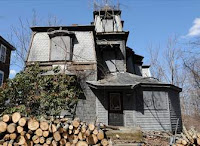
The Bentley-Jackson Cottage at 9 Earle St. is a good example. Although listed on the National Register of Historic Places, it looks more like ancient ruins. It has rotted siding, broken windows and a sunken porch. Its yard is a magnet for illegal dumping. On one particular day a three-legged black cat was poking around an abandoned Honda Civic, next to a rusty camper laying face down, empty paint buckets and a gutted easy chair.
“This is disgusting,” said Maria Dellostritto, who has lived next door for 30 years. Her yard is in stark contrast: green and spotless with a row of flowers on the property line. Ms. Dellostritto has complained to the city countless times about the Bentley-Jackson Cottage: a phone call about the 5-foot grass, another about the abandoned car and one about a skunk that moved in. Her frustration with the city peaked five years ago and she considered selling her house. “I was tired of dealing with it,” she said. “Clean it up, tear it down, whatever.”
That is almost the message from Khalid Saeed, professor of economics and system dynamics at Worcester Polytechnic Institute. He said many of the original homes like the Bentley-Jackson Cottage were built for the rich who controlled the factories and mills of this once industrial town. Today, he said, the city embraces education and high-tech industries by converting old factories into apartments, restaurants and office space.
He believes that houses rich with history and aesthetic appeal can be helped if offered for sale at good prices, with low property taxes and agreeable restoration laws. Otherwise, it would better serve the community to tear them down and rezone for business that will boost tax revenues, improve city services and raise property values. “This is what happened in Boston in the 1970s,” he said, acknowledging that bulldozing entire neighborhoods is controversial.
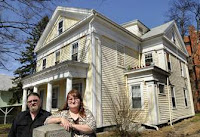
Frederick A. Webber, 51, lives in the S.D. Newton House at 8 Sycamore St. Sold at a bank foreclosure in December 2007, the building has an exterior in desperate need of repair. Mr. Webber hopes to begin restoration as soon as grant money arrives.
An admitted Internet junkie, he saw a photo of the 1849 house, with its Greek Revival architecture and four Doric columns, on the bank’s Web site. “It was one of those photos that captures your eye,” he said. Over the years, he said he has bought homes this way, made repairs, then sold for a profit.
This house, he says, he will live in forever. “I’d love to see the original blueprints.”
When the Notre Dame des Canadiens closed last July because of a steady decline in church attendance and priesthood enrollment, the Worcester Diocese was left with a majestic cathedral built in 1929 that needed several million dollars in repairs just to shore up its roof and walls, said Monsignor Thomas Sullivan, the diocesan chancellor. It has no buyer or prospects despite numerous presentations to other church groups, the city, museums and colleges. It now makes its debut on the 2009 list of Preservation Worcester’s 10 most endangered structures. Updated every year and published for 15 years, the list from the 40-year-old organization focuses mostly on distressed buildings with a mix of history, culture and architectural curb appeal.
Although many of the properties listed have been in serious decline for years, Preservation Worcester hopes this year will be different. But with tight bank credit and a deep recession, the chance of these fragile links to Worcester’s past getting a full makeover and return to their architectural glory is dimming.
“I would think that it would be harder for anyone to maintain because of the economy,” said Deborah Packard, executive director of Preservation Worcester. Its endangered list is kept to 10 — though there are hundreds more structures that qualify — partly so the organization can stay focused on the owners of the buildings most in need.
Worcester is not alone. Although state and federal tax credits are still in place for preserving historical structures, there are fewer buyers on the market and abandonment is a problem.
“With the rate of housing foreclosure in the Northeast, we are concerned about the stability of historic and older neighborhoods, in particular urban neighborhoods,” said Wendy Nicholas, director of the Northeast regional office for the National Trust for Historical Preservation.
Ms. Nicholas added that when historic homes deteriorate badly, neighbors get nervous, upset and put pressure on city hall to demolish. “It is a bad downward spiral,” she said.
The Bentley-Jackson Cottage at 9 Earle St. is a good example. Although listed on the National Register of Historic Places, it looks more like ancient ruins. It has rotted siding, broken windows and a sunken porch. Its yard is a magnet for illegal dumping. On one particular day a three-legged black cat was poking around an abandoned Honda Civic, next to a rusty camper laying face down, empty paint buckets and a gutted easy chair.
“This is disgusting,” said Maria Dellostritto, who has lived next door for 30 years. Her yard is in stark contrast: green and spotless with a row of flowers on the property line. Ms. Dellostritto has complained to the city countless times about the Bentley-Jackson Cottage: a phone call about the 5-foot grass, another about the abandoned car and one about a skunk that moved in. Her frustration with the city peaked five years ago and she considered selling her house. “I was tired of dealing with it,” she said. “Clean it up, tear it down, whatever.”
That is almost the message from Khalid Saeed, professor of economics and system dynamics at Worcester Polytechnic Institute. He said many of the original homes like the Bentley-Jackson Cottage were built for the rich who controlled the factories and mills of this once industrial town. Today, he said, the city embraces education and high-tech industries by converting old factories into apartments, restaurants and office space.
He believes that houses rich with history and aesthetic appeal can be helped if offered for sale at good prices, with low property taxes and agreeable restoration laws. Otherwise, it would better serve the community to tear them down and rezone for business that will boost tax revenues, improve city services and raise property values. “This is what happened in Boston in the 1970s,” he said, acknowledging that bulldozing entire neighborhoods is controversial.
Frederick A. Webber, 51, lives in the S.D. Newton House at 8 Sycamore St. Sold at a bank foreclosure in December 2007, the building has an exterior in desperate need of repair. Mr. Webber hopes to begin restoration as soon as grant money arrives.
An admitted Internet junkie, he saw a photo of the 1849 house, with its Greek Revival architecture and four Doric columns, on the bank’s Web site. “It was one of those photos that captures your eye,” he said. Over the years, he said he has bought homes this way, made repairs, then sold for a profit.
This house, he says, he will live in forever. “I’d love to see the original blueprints.”
I was tired of dealing with it. Clean it up, tear it down, whatever. -- maria dellostritto, NEIGHBOR OF HISTORIC HOME

On the job
William N. Prifti, Chocolate maker/owner, Prifti Candy Co., Worcester
Age: 86
Residence: WorcesterNative of: Istanbul, Turkey
Family: Married. One son, two grandchildren
Time in current job: 43 years
What do you do?
“I make chocolate here seven days a week. Last year I sold tons and tons of Easter bunnies. I don’t know exactly how many.”
How do you make chocolate?
“I buy the chocolate from Nestle, then I have to cook to make the crèmes, to make the caramels, and there are different secrets to make it this way. I try every batch I make. If I don’t like it, I don’t put it out for sale. In one mixer I have milk chocolate, another dark and another white chocolate. That one holds 400 pounds of chocolate. After they are mixed then they go into the molds. On this machine I can make crème and caramel chocolates. They are cut by hand and this machine presses the crèmes and makes individual round soft centerpieces.”
Like valentine candy?
“Or anything like that. But it goes down this conveyor belt, which cools it like an air conditioner. Then at the end we pick up the pieces and put it in trays. Today we are making small boxes of chocolates for a wedding. A lot of people get married today, get divorced tomorrow. But the chocolate lives forever.”
I want to eat everything in your shop. Can you tell me what you have in your Easter baskets?
“This basket I started to make in the United States 25 years ago. It is a special design that no one can copy. It is a mold so that the entire basket is made of chocolate. I have milk chocolate, dark chocolate, anything you want. Everything is chocolate. All of the little eggs and bunnies in the basket I make here. The chocolate Easter bunnies are made from molds made in Germany. My biggest mold can make a five-foot Easter bunny. I make it to show, it’s too expensive. To make 100 baskets would take about an hour. It’s very, very hard. Easter is my biggest time of year but at Christmas, a lot of orders come in.”
Did you learn the candy business in Istanbul?
“Yes. I worked for someone and I made candy and pastry. Then when I came here, I started the candy business.”
Did you start your own business when you immigrated?
“No. When I came to the U.S. I worked at Drakes Candy, and then I went to Hebert’s Candy. Then after a while I decided to start this business. I came to the United States when I was about 34 or 35. I dreamed of coming here. The United States is the best country in the world. I started this business on October 11, 1965.”
Ever thought of retiring?
“I don’t want to retire. Maybe someday, I don’t know. Maybe when I die. I will keep going till I am six feet under. If I stay home I go crazy, sitting down and watching TV all day. I’m 86 years old. I don’t want to stop.”
How is business?
“Business is good, no problem. I have a little bit of hard times, not too bad. I’ve got no complaint. Because everything I make right here. We have the best quality; I haven’t changed the quality in all these years. My son, he can have the business, but he doesn’t want the business. You know the kids today, they have different ideas and my son has another job, but he still comes in here to help me.”
What would happen to the chocolate factory after you die?
“I don’t know, maybe shut down, we’ll see what happens. Kids today, they don’t want to learn. People ask, ‘How many hours do I have to work?’ ”
How many hours a week do you work?
“I work seven days a week. During Easter I work 12-hour days. My wife yells at me all the time because it’s too much. I tell her, ‘Hey, that’s all.’
“In the summer it’s quiet, but then I’m getting ready for the fall. It is mostly my wife and my cousin who work here.”
What is the best part of the job?
“Just making candy. When I sleep, I dream of making candy. I like to cook it all the time.”
What is the worst part of the job?
“Nothing. I love the chocolate.”
Do you wholesale your chocolate?
“No, because when you wholesale the quality goes down. They have to make money and I have to make money so I would have to cut corners to do that. I haven’t changed anything since 1965.”
Were there other chocolate factories like yours in Worcester when you started?
“Yes, I had a lot of competition. There were a lot of stores, I don’t know exactly how many. When I opened, people would say, ‘This guy will never make it, maybe a few months.’ But all of these guys have gone out of business, and I’m still here.”
Compiled by: Correspondent Richard Price
To be featured in or to suggest a job profile, send information to Dave Greenslit, Telegram & Gazette, Box 15012, Worcester, MA 01615-0012, or send an e-mail to dgreenslit@telegram.com.
“I make chocolate here seven days a week. Last year I sold tons and tons of Easter bunnies. I don’t know exactly how many.”
How do you make chocolate?
“I buy the chocolate from Nestle, then I have to cook to make the crèmes, to make the caramels, and there are different secrets to make it this way. I try every batch I make. If I don’t like it, I don’t put it out for sale. In one mixer I have milk chocolate, another dark and another white chocolate. That one holds 400 pounds of chocolate. After they are mixed then they go into the molds. On this machine I can make crème and caramel chocolates. They are cut by hand and this machine presses the crèmes and makes individual round soft centerpieces.”
Like valentine candy?
“Or anything like that. But it goes down this conveyor belt, which cools it like an air conditioner. Then at the end we pick up the pieces and put it in trays. Today we are making small boxes of chocolates for a wedding. A lot of people get married today, get divorced tomorrow. But the chocolate lives forever.”
I want to eat everything in your shop. Can you tell me what you have in your Easter baskets?
“This basket I started to make in the United States 25 years ago. It is a special design that no one can copy. It is a mold so that the entire basket is made of chocolate. I have milk chocolate, dark chocolate, anything you want. Everything is chocolate. All of the little eggs and bunnies in the basket I make here. The chocolate Easter bunnies are made from molds made in Germany. My biggest mold can make a five-foot Easter bunny. I make it to show, it’s too expensive. To make 100 baskets would take about an hour. It’s very, very hard. Easter is my biggest time of year but at Christmas, a lot of orders come in.”
Did you learn the candy business in Istanbul?
“Yes. I worked for someone and I made candy and pastry. Then when I came here, I started the candy business.”
Did you start your own business when you immigrated?
“No. When I came to the U.S. I worked at Drakes Candy, and then I went to Hebert’s Candy. Then after a while I decided to start this business. I came to the United States when I was about 34 or 35. I dreamed of coming here. The United States is the best country in the world. I started this business on October 11, 1965.”
Ever thought of retiring?
“I don’t want to retire. Maybe someday, I don’t know. Maybe when I die. I will keep going till I am six feet under. If I stay home I go crazy, sitting down and watching TV all day. I’m 86 years old. I don’t want to stop.”
How is business?
“Business is good, no problem. I have a little bit of hard times, not too bad. I’ve got no complaint. Because everything I make right here. We have the best quality; I haven’t changed the quality in all these years. My son, he can have the business, but he doesn’t want the business. You know the kids today, they have different ideas and my son has another job, but he still comes in here to help me.”
What would happen to the chocolate factory after you die?
“I don’t know, maybe shut down, we’ll see what happens. Kids today, they don’t want to learn. People ask, ‘How many hours do I have to work?’ ”
How many hours a week do you work?
“I work seven days a week. During Easter I work 12-hour days. My wife yells at me all the time because it’s too much. I tell her, ‘Hey, that’s all.’
“In the summer it’s quiet, but then I’m getting ready for the fall. It is mostly my wife and my cousin who work here.”
What is the best part of the job?
“Just making candy. When I sleep, I dream of making candy. I like to cook it all the time.”
What is the worst part of the job?
“Nothing. I love the chocolate.”
Do you wholesale your chocolate?
“No, because when you wholesale the quality goes down. They have to make money and I have to make money so I would have to cut corners to do that. I haven’t changed anything since 1965.”
Were there other chocolate factories like yours in Worcester when you started?
“Yes, I had a lot of competition. There were a lot of stores, I don’t know exactly how many. When I opened, people would say, ‘This guy will never make it, maybe a few months.’ But all of these guys have gone out of business, and I’m still here.”
Compiled by: Correspondent Richard Price
To be featured in or to suggest a job profile, send information to Dave Greenslit, Telegram & Gazette, Box 15012, Worcester, MA 01615-0012, or send an e-mail to dgreenslit@telegram.com.
Tuesday, March 3, 2009
On the Job: Ron Gosselin

Monday, March 2, 2009
On the job
Ronald A. Gosselin, barber and owner of Ron’s Barber Shop, North Grafton
Ronald A. Gosselin at his business, Ron’s Barber Shop in North Grafton. (T&G Staff / MARK C. IDE)
Age: 74
Native of: Northbridge
Ronald A. Gosselin at his business, Ron’s Barber Shop in North Grafton. (T&G Staff / MARK C. IDE)
Age: 74
Native of: Northbridge
Residence: Northbridge
Family: Widowed. 11 grandchildren
Time in current job: 50 years
What do you do?
“I opened up in Grafton in 1958. I got a thing on the wall that says, ‘Love your job and never work a day in your life.’ People come in, we shoot the breeze — I enjoy it. I was out of the military, and I don’t know if they still do it, but in those days they paid you to go to school. And I didn’t want to study. I decided to go to barber school and fool around for a while. “This (barber) chair was made in 1901. What happened is that the guy I was friends with, he was my mentor. When I came out of barber school, he retired. He gave me the chair. I’ve had it ever since. It’s an old one. If it could only talk.”
“I don’t use a straight razor because of AIDS. They came out with a law and I’m supposed to wear gloves. But … you can’t feel a person’s face if you have gloves on. “When I first started, Elvis Presley was popular and he used to wear a DA. They would comb the middle part. The top is like a flat-top. The front is left long enough so they could roll it down. It’s the only haircut I’ve never seen come back. The others I’ve seen come back.”
Tell us how you made toupees in the 1970s.
“When long hair was very popular … I put hairpieces together so I could put hair on people. People didn’t want to go bald — everyone wanted hair. So I put hair on, instead of taking it off.”
Ever thought of retiring?
“Nope. I like it. It’s fun. Why should I quit doing something I like? I fell into it by accident. I hadn’t even thought of being a barber, but I thought I’d go to school. “I sure didn’t want to do what I did in the military. I was a medic. That wasn’t for me.”
How many vacation days a year do you give yourself?
“I take one week. I got a house on the ocean, down on the Cape. I go down a lot on the weekends. But after a week, I’m ready to come back.”
So you’ll keep doing this till you can’t stand up anymore?
“Yeah. It’s a funny thing because I can stand up all day long and it doesn’t bother me. I don’t know why my legs have held up. And my hands don’t bother me. Nothing hurts.”
You have a lot of fishing memorabilia on the walls. What is your best fishing tournament story?
“In Rhode Island, Ted Williams beat me. I think in the early 1960s. He was retired. I didn’t follow baseball, so I didn’t know who Ted Williams was. He came over, his boat was in front of mine and he came over with a six-pack every time we’d come back from going out fishing. I came in with a 697-pound tuna. And Mr. Williams came in and set the world’s record, a 1,292 pounder. He was very anxious about fishing. He was quite a fisherman, I’ll tell you that much.”
Sunday, January 25, 2009

Monday, December 29, 2008
On the job
Jennifer A. Foley, Front-End Manager / Human Resources, Klem’s, Spencer
What do you do?
“I started off as a cashier, and it has always been my primary main position throughout high school. I used to come in one day a week when I was in college and work in the office. After I graduated, that’s when I got the promotion to do what I do now. But it’s always been just cashier. Now I’m the front-end manager because I know the systems inside and out.”
What do you do in human resources?
“I help out with some of the insurance work and I process our payroll.”
Have the ice storms, snowstorms and bad economy hurt business?
“You’d think with the weather that we’ve had it would get slow, but we were busy this weekend like you never even would know there was snow, what with it being the last weekend before Christmas. We sell snow blowers, so actually we were very, very busy. Our generators flew off the shelves in an hour.”
Is the day after Christmas usually the busiest day of the year for you?
“It’s very hectic that day in different aspects. In one way we have people coming in with exchanges, like things they don’t like. Almost everyone who walks in the door has a return. At the same time, they always buy more, and we sell so many gift certificates during the Christmas season that everyone comes in to use those. So actually, it is a very busy day. “We have six registers that are all up and running. We don’t have anyone new so we’re pretty able to control the lines. “The day after Thanksgiving we do everything in the store 20 percent off. We consider the day after Thanksgiving the start of the Christmas season. But in the spring, right when people are starting to care for their lawns, are the two busiest times of the year for us.”
Has Internet shopping like Amazon cut into your business in the last 10 years?
“No. We have shop online, too. During the Christmas season we have a lot of people who choose to do that, too. I don’t think it has hurt us in any way. We stand pretty well on our own.”
What are the top items that people want to exchange or return?
“Clothes. Get a different size or whatnot. And shoes.” What has been the big seller for you this season? “We’ve just added a line of higher-end clothing. We sell Columbia, Merrill shoes. We stepped up the game on clothes. Our clothing sells very well. We have Izod and Woolrich, so those brands do very well.”
What is the best part of your job? “I really enjoy the cashiers. I think they’re a great group of girls. I give them advice. I’ve been through it all. I’ve been to high school. I’ve been to college. So, I help them out. I like meeting people. Because I’ve worked here so long, I know so many people that shop here. I like to see people I know a lot.”
What are the biggest hurdles being a cashier at Klem’s? “Scheduling conflicts. Making sure we’re fully staffed. It’s especially tough this time of season because four of them could have a Christmas party on the same day. You can’t tell someone they can’t go to their family Christmas party.”
Do you have staff turnover? “With cashiers we don’t have that much turnover. If anything, it’s because they need to go to college.” What is the most challenging part of your job? “When the store is just busy. You’re literally running around all day. It’s not even challenging, as in hard. On busy days it’s just tough to do one thing and knowing you have 17 other things that you have to do right after. It’s not tough, it’s just busy.”
As a cashier or front-end manager have you witnessed shoplifting?
“Yes. But we’ve just added a new security system to the store, so theft has gone down a lot. Cashiers have witnessed it, but we’re always well staffed on our floor, where they normally would be the ones to catch it first.”
Is this the only job you’ve ever known? “No. I’ve been a nanny. I’ve been a waitress, a swimming lesson instructor. Through college, I’ve always had more than one job.”
Compiled by: Correspondent Richard Price
Health care advocates meet on funding drug treatment but face a sobering reality

Sunday, January 25, 2009
Funding for drug treatment a challenge
Moyers addresses advocates in city
By Richard Price CORRESPONDENT
WORCESTER — As a teenager, it started with his love of marijuana. By college, he was binge drinking and using heavy drugs. In his 30s, he was a writer for CNN, a family man and a crack cocaine addict. Finally, he went through rehabilitation, came out the other side and is now an advocate to help others.
This is William C. Moyers’ story. Clean since 1993, he is the executive director of public advocacy for the Minneapolis-based Hazelden clinic. Friday morning in a banquet room at Worcester’s Beechwood Hotel, Mr. Moyer stood in a packed room of local health care advocates, medical doctors, researchers and legislators. His story is simple: motivate his fellow alcohol and drug treatment advocates in educating the public that addiction is a treatable disease and to get ready to fight for funding if national health care reform becomes a reality.
But Massachusetts faces a stiff headwind of declining tax revenue, rising unemployment, bloated government deficits, and a perception that substance abuse treatment is a revolving door with little success. This leaves some health care providers with the sobering thought of how to do more with less money in the cookie jar.
But Massachusetts faces a stiff headwind of declining tax revenue, rising unemployment, bloated government deficits, and a perception that substance abuse treatment is a revolving door with little success. This leaves some health care providers with the sobering thought of how to do more with less money in the cookie jar.
“Whenever health care reform comes, it’s going to require all diseases have evidence-based practices and evidence-based outcomes that work,” Mr. Moyers said. “The addiction field has been woefully behind the curve.”
Stigma is also an issue in the battle for funding, said Mr. Moyers, author of The New York Times bestseller “Broken: My Story of Addiction and Recovery” and the son of journalist Bill Moyers. The aura of crime, homelessness and family abuse is a barrier to some taxpayers who see drug use as a choice.
But Mr. Moyers sees it differently. “There are people whose behavior has led to lung cancer. It’s called smoking. We don’t deny smokers access to lung cancer treatment just because they smoked.”
Janice B. Yost, president and CEO of The Health Foundation of Central Massachusetts, believes the public needs to be educated. “Not everyone responds to the same treatment,” she said. “If it were cancer, a doctor might say, ‘We’ll try this and if that doesn’t work, we’ll try something else.’ But substance abuse has the stigma that, after one treatment, you should be cured.”
However, finding a way to pay for these services is a challenge. State Rep. Robert A. DeLeo, D-Revere, said that, as chairman of the House Ways and Means Committee, he supports state-funded mental health and substance abuse services but is trying to duck from the budget-cut hatchet. “The downward economy has affected us all,” he said to the group, “but as in most cases, it has hit the vulnerable and the sick particularly hard. And the situation, I would dare say, seems to be getting somewhat more challenging.”
In addition, he said, the state spends more than $457 million on services including child and adolescent mental health care, not just drug and alcohol treatment. But with declining tax revenues, the state needs to cut $675 million from the budget. How much will be cut from social services is not yet known. “Next fiscal year,” he said with a warning, “will probably be the greatest challenge we’ve ever faced.”
State Rep. George N. Peterson Jr., R-Grafton, said he believes the funding should be a government priority and he is supportive of raising taxes on some revenue sources, such as alcohol, so long as the money is spent wisely. “The problem I have in most cases is that in other programs we have failed that mission,” he said. When too much money is raised, the surplus is often funneled to something unrelated, he said.
Mr. Moyers said the trick is to successfully win national funding, and with President Obama making health care reform a priority, time might be running short.
What is the alternative if they don’t get what they need from Washington?
“Plan B is to do it on the grass roots, to continue the message of hope and help and healing, to continue to engage policymakers in meaningful reform at the state level,” Mr. Moyers said.
Monday, November 24, 2008
On the Job. Monday, November 24, 2008

Seth Derderian, owner of Joseph’s Lock and Safe Co. in Worcester, with a selection of the products his company sells and services. (T&G Staff / PAUL KAPTEYN)
Enlarge photo
What do you do?
“I’m the owner, but I’m the manager. I do estimating. And I oversee the company and I’m actively involved. As an owner, I wear many hats. I’m involved in accounting, human resources. I’m involved in purchasing. I’m involved in service. I’m fascinated with locks and safes and keyless entry systems. I was always extremely mechanically inclined. I always wanted to understand how things worked.”
How did you get started in the business?
“My father and uncle started the business after World War II. I started working there when I was 15 or 16 years old. I bought the business when I was maybe 30. I had passion; I was just intrigued by it. When I was a kid, I was, ‘Oh, how does this work?’ When I was a kid, I used to say, ‘Dad, can I go to work with you?’ ”
Is your safe business more residential or commercial?
“Most of our business is commercial. We do banks, we do credit unions, all sorts of convenience stores, restaurants, package stores, offices. The residential side is off. With the turn of the economy, people don’t have the extra money to build a safe into a room they might be remodeling or I don’t think people have as much cash or valuables. It’s a down cycle, on the residential side of it.”
I would have thought with the economy and stock market sliding that more people would want a safe in their home as an alternative to the bank, but that’s not the case?
“No, and if they’re buying it, they’re buying it from someone else. No one is coming into the store and saying, ‘I’ve had it, I’m afraid. I’m taking my money out of the bank.’ We saw this 15 years ago. There was a time when the market started to fluctuate and people were coming in and saying, ‘I don’t know where this economy is going, and I think I’m going to buy a safe because I don’t trust the banks anymore.’ ”
Do you think that could happen again?
“They may. The first time around, there was a lot of concern with a lot of the banks closing up and going bankrupt, but now, with what I have been reading, I think we’re going to be OK.”
Should more people have a safe in their home?
“Everyone should have a safe if they have anything of value, if they’re concerned about a fire or robbery. Whether it be jewelry, whether it be a passport, whether it be a birth certificate, they should be kept in a safe place. There’s no doubt.”
What is the best part of your job?
“I love it because it’s different every day. The job is different, the customer is different, the problem is different, the solution is different. I personally am satisfied that we help people resolve a problem.”
What is the worst part of the job? “The problems we run into are scheduling conflicts. The toughest part of the business is to be able to be there for the customer at the right time and the customer to be there so we can do it all. The most difficult part of the job is keeping the scheduling with our customer. We strive hard to do it. You call a customer about a 2 o’clock appointment and you get voice mail and no one there to pick up the phone and you got three guys ready to do something, so sometimes that can be discouraging.”
Have you installed a safe for someone who had an unusual amount of valuables to store away?
“We’ve had some very, very interesting cases. They are people who have acquired an incredible amount of jewelry, gold, coins, and like that.”
What have you learned from your 38 years on the job?
“I would have liked to have a master’s degree in business and a master’s degree in psychology. It’s understanding the dynamics of dealing with the people, the customer. How they act and react. They’ll say, ‘I need it right now.’ When our customers call sometimes it’s generally a crisis.”
What kind of emergencies do you come across in the safe business?
“It’s when (the safe) won’t open or they have to change the combination. Things like that. They’ll say, ‘We’ll be there at 4 o’clock.’ But the person has to be there. And then you call at 4 o’clock and you get voice mail. Then 40 minutes go by and they end up calling you at 5 o’clock. That’s the service side of the business. It’s not like we’re showing up at a building to paint a wall or wash a window. We have to meet somebody to get a combination and it’s not just anybody in the company. It’s usually the owner or one or two people.”
In movies, safecrackers can open safes by listening to the tumblers clicking. Is that for real or is it just a Hollywood thing?
“It can be done, but it’s not as simple as it is in the movies. Some safes have to be drilled to be opened. We have these modern computerized robotic dialers that we can put on a safe. And we can turn them on at the end of the day. They’ll run 100,000 possible combinations. And that’ll work on maybe 30 or 40 percent of the market.” Compiled by: Correspondent Richard Price
Monday, July 7, 2008
1031 exchanges yield income
1031 exchanges yield income, write-offs
Market for exchanges grew to $4 billion in 2007, from $200 million in 2001
By Richard Price February 11, 2008
Post a Comment
gSiteLife.Recommend("ExternalResource", "Article546590174");
Recommend
The strategy of swapping investment properties is similar to the dreaded Yankee gift swaps, in which everyone buys a holiday present for someone else and then, in a lottery style face off, swaps it for something more desirable.
In essence, participants hope to walk off with the cool iPod accessories and not get stuck with the hand-knitted tea cozy.
In the world of swapping properties, the idea is for advisers to send home clients with a Class A property with great cash flow, not the real estate version of the tea cozy.
When an investor trades an apartment house for a new and hopefully improved building, the transaction is classified as a Section 1031 tax-deferred exchange under Internal Revenue Service rules.
The market for exchanges has grown to more than $4 billion in 2007, from $200 million per year in 2001, said Jeff Hanson, chief investment officer at Triple Net Properties LLC, a Santa Ana, Calif.-based provider of tenant-in-common programs.
Tenancy in common is an interest in property between two or more people. But in a new twist to the old deal, clients can opt for a tenant- in-common fractional-ownership approach, which allows them to choose from among high-rise office buildings, apartment complexes and retail strip malls.
Under this arrangement, the client is a partial owner with other investors in the building and receives depreciation write-offs. In these deals, the IRS caps the number of investors at 35.
For instance, Don Ingram, an independent adviser at Ingram Financial Group Inc. in Winter Haven, Fla., is a 1031 specialist.
He helped a client sell his citrus grove business and reinvest in an apartment building complex in North Carolina. The deal generates cash flow of 6.5% but without the responsibilities of owning a grove.
Investors in 1031 exchanges are generally at least 60 years old, are seasoned investment property owners, and they plan to hold the deed on the property until it passes to their heirs, said Brent Barnes, who has many clients in tenant-in-common investment programs and runs a tax advisory business near Nashville, Tenn. "At that point, the surviving children get a step-up in the cost basis," he said.
Both Mr. Ingram and Mr. Barnes work at finding suitable prospects for 1031 exchanges. For instance, Mr. Ingram's partner and independent adviser, Nick Toadvine, is an active member of the Florida Citrus Association in Orlando. Mr. Barnes relies on his tax advisory business to identify clients who own investment property.
If you are considering helping clients exchange their properties, here are some pointers:
• Only investment properties, not personal residences, can qualify. "Look at the tax returns filed every year," said Randy Beckman, senior vice president at Triple Net Properties. "The returns should say they are marked as investment properties." But when in doubt, check with a certified public accountant.
• The swap must be for a similar type of investment, also referred to as a like-kind exchange.
• After the sale of a property, investors have 180 days to land a new one. The IRS rules are clear: Beginning the day after a sale closes on an existing property, a client has 45 days to choose a replacement property and then close on it within 180 days.
Neither weekends nor legal holidays stretch out the time period, Mr. Beckman said. He recommends earmarking up to three properties — even if they plan to roll into only one — to hedge their bets in case the first and second choices do not work out.
• Hire a middleman to help with the execution. In fact, you'll need to hire three of them. An exchange that doesn't raise the IRS' eyebrow will require the help of a certified public accountant, a real estate attorney and a qualified intermediary, a specialized escrow agent. The intermediary holds the funds from the property that was sold until a new property is bought.
Hiring an accountant or an attorney as an intermediary jeopardizes the integrity of the transaction. But as anyone who has closed on a house knows, there are many papers to file and sign, so the scrutiny of a CPA and an attorney will ensure that the exchange will go well.
• Choose proficient clients who have investment real estate experience and have enough investible assets to make the strategy viable. For instance, Mr. Ingram selects clients who have a minimum of $1 million of investible assets and at least $200,000 for the tenant-in-common program.
Richard Price is a senior research analyst for Investors Capital Corp. of Lynnfield, Mass. He can be reached at rprice@investorscapital .com.
Market for exchanges grew to $4 billion in 2007, from $200 million in 2001
By Richard Price February 11, 2008
Post a Comment
gSiteLife.Recommend("ExternalResource", "Article546590174");
Recommend
The strategy of swapping investment properties is similar to the dreaded Yankee gift swaps, in which everyone buys a holiday present for someone else and then, in a lottery style face off, swaps it for something more desirable.
In essence, participants hope to walk off with the cool iPod accessories and not get stuck with the hand-knitted tea cozy.
In the world of swapping properties, the idea is for advisers to send home clients with a Class A property with great cash flow, not the real estate version of the tea cozy.
When an investor trades an apartment house for a new and hopefully improved building, the transaction is classified as a Section 1031 tax-deferred exchange under Internal Revenue Service rules.
The market for exchanges has grown to more than $4 billion in 2007, from $200 million per year in 2001, said Jeff Hanson, chief investment officer at Triple Net Properties LLC, a Santa Ana, Calif.-based provider of tenant-in-common programs.
Tenancy in common is an interest in property between two or more people. But in a new twist to the old deal, clients can opt for a tenant- in-common fractional-ownership approach, which allows them to choose from among high-rise office buildings, apartment complexes and retail strip malls.
Under this arrangement, the client is a partial owner with other investors in the building and receives depreciation write-offs. In these deals, the IRS caps the number of investors at 35.
For instance, Don Ingram, an independent adviser at Ingram Financial Group Inc. in Winter Haven, Fla., is a 1031 specialist.
He helped a client sell his citrus grove business and reinvest in an apartment building complex in North Carolina. The deal generates cash flow of 6.5% but without the responsibilities of owning a grove.
Investors in 1031 exchanges are generally at least 60 years old, are seasoned investment property owners, and they plan to hold the deed on the property until it passes to their heirs, said Brent Barnes, who has many clients in tenant-in-common investment programs and runs a tax advisory business near Nashville, Tenn. "At that point, the surviving children get a step-up in the cost basis," he said.
Both Mr. Ingram and Mr. Barnes work at finding suitable prospects for 1031 exchanges. For instance, Mr. Ingram's partner and independent adviser, Nick Toadvine, is an active member of the Florida Citrus Association in Orlando. Mr. Barnes relies on his tax advisory business to identify clients who own investment property.
If you are considering helping clients exchange their properties, here are some pointers:
• Only investment properties, not personal residences, can qualify. "Look at the tax returns filed every year," said Randy Beckman, senior vice president at Triple Net Properties. "The returns should say they are marked as investment properties." But when in doubt, check with a certified public accountant.
• The swap must be for a similar type of investment, also referred to as a like-kind exchange.
• After the sale of a property, investors have 180 days to land a new one. The IRS rules are clear: Beginning the day after a sale closes on an existing property, a client has 45 days to choose a replacement property and then close on it within 180 days.
Neither weekends nor legal holidays stretch out the time period, Mr. Beckman said. He recommends earmarking up to three properties — even if they plan to roll into only one — to hedge their bets in case the first and second choices do not work out.
• Hire a middleman to help with the execution. In fact, you'll need to hire three of them. An exchange that doesn't raise the IRS' eyebrow will require the help of a certified public accountant, a real estate attorney and a qualified intermediary, a specialized escrow agent. The intermediary holds the funds from the property that was sold until a new property is bought.
Hiring an accountant or an attorney as an intermediary jeopardizes the integrity of the transaction. But as anyone who has closed on a house knows, there are many papers to file and sign, so the scrutiny of a CPA and an attorney will ensure that the exchange will go well.
• Choose proficient clients who have investment real estate experience and have enough investible assets to make the strategy viable. For instance, Mr. Ingram selects clients who have a minimum of $1 million of investible assets and at least $200,000 for the tenant-in-common program.
Richard Price is a senior research analyst for Investors Capital Corp. of Lynnfield, Mass. He can be reached at rprice@investorscapital .com.
Dividend Paying Stocks are a best bet
Dividend-paying stocks resilient to market mess
Article Tools
Email to a friend
Print
RSS Feed
Subscribe Discuss -->
addthis_pub = 'seniormarketadvisor';
Share
Related Articles
More from the jelly-of-the-month club
Boomers dying to make a difference
Related News
Study targets Hispanic Boomers' view on health care, finance and consumerism
Boomers choose new careers for their next phase, survey reports
By Richard Price Published July 1, 2008 From the 2008 Issue of Boomer Market Advisor Magazine
When I was in college, my girlfriend inherited a block of ExxonMobil stock from her grandfather. While he was alive, he preached the value of dividends and how they will take care of you in good times and bad. He told her never to sell the shares.
I never forgot what a lifesaver that check was for her. It wasn’t a big amount, about $300, but it always came at the right time, when schoolbooks were needed or the rent was due. Good old ExxonMobil — boring, predictable and always there to help.
It’s time to revisit the old and boring dividend stocks again.
I recently spent time with Tom Cameron and Greg Donaldson, two seasoned money managers who dedicate their professional lives to finding dividend paying dullards. They believe dividends are exactly what investors need in the aftermath of the subprime mortgage fiasco. And certain dividend-paying companies are proving to be downright weatherproof against recession.
Donaldson, director of portfolio strategy for Donaldson Capital Management, showed me a chart of companies that have raised their dividend every year over the past five years on an average of 10 percent or more. The resilience of some of these companies in the past months was profound: all of the large companies in his basket had raised their dividend; not one had lowered. The list included Coca-Cola, Abbot Labs and ITT.
Donaldson believes our chances of having found the market’s bottom is now at 70 percent, which he credits to the Fed rate cuts and the bailout of Bear Stearns. But he also believes it will be a choppy market for some time. That means that companies like Colgate Palmolive, which just raised its dividend another 11 percent (to 40 cents per share), will provide one of the few bright spots in a client portfolio.
He also likes Proctor and Gamble, not just because it doubles its dividends almost every seven years, but because it is a worldwide operation with more than 54 percent of sales occurring overseas.
Cameron, who manages the Dividend Growth Advisors mutual fund, blames hedge funds, especially offshore hedge funds, for a chunk of the financial mess. Cameron believes these mortgage debt packages are so complex they are nearly impossible to understand, which explains why many are no longer trading. Since he began his investment career in 1951, Cameron has seen it time and time again: the more complex the investment, the more trouble investors get into.
His core philosophy is simple — buy companies that have raised their dividend an average of 10 percent or more a year for ten consecutive years. This is why he likes McDonald’s, IBM and General Electric.
But what about the favorable tax treatment set at a maximum of 15 percent? Unless Congress acts, it’s set to expire at the end of 2010, possibly leading to a sharp sell-off. Cameron believes it’s important for stockholders to continue receiving dividend increases that are either at, or greater than, the rate of inflation.
Donaldson says many of these large companies are in pension plans, 401(k) plans and other tax shelters where tax law changes are irrelevant. Also, foreign countries own large positions so these laws have no effect on them. For those interested in researching dividend rising stocks, go to www.dividendachievers.com and www.dividendinvestor.com. Richard Price is an analyst with Investors Capital in Lynnfield, Mass. He can be reached at rprice@investorscapital.com.
Article Tools
Email to a friend
RSS Feed
Subscribe Discuss -->
addthis_pub = 'seniormarketadvisor';
Share
Related Articles
More from the jelly-of-the-month club
Boomers dying to make a difference
Related News
Study targets Hispanic Boomers' view on health care, finance and consumerism
Boomers choose new careers for their next phase, survey reports
By Richard Price Published July 1, 2008 From the 2008 Issue of Boomer Market Advisor Magazine
When I was in college, my girlfriend inherited a block of ExxonMobil stock from her grandfather. While he was alive, he preached the value of dividends and how they will take care of you in good times and bad. He told her never to sell the shares.
I never forgot what a lifesaver that check was for her. It wasn’t a big amount, about $300, but it always came at the right time, when schoolbooks were needed or the rent was due. Good old ExxonMobil — boring, predictable and always there to help.
It’s time to revisit the old and boring dividend stocks again.
I recently spent time with Tom Cameron and Greg Donaldson, two seasoned money managers who dedicate their professional lives to finding dividend paying dullards. They believe dividends are exactly what investors need in the aftermath of the subprime mortgage fiasco. And certain dividend-paying companies are proving to be downright weatherproof against recession.
Donaldson, director of portfolio strategy for Donaldson Capital Management, showed me a chart of companies that have raised their dividend every year over the past five years on an average of 10 percent or more. The resilience of some of these companies in the past months was profound: all of the large companies in his basket had raised their dividend; not one had lowered. The list included Coca-Cola, Abbot Labs and ITT.
Donaldson believes our chances of having found the market’s bottom is now at 70 percent, which he credits to the Fed rate cuts and the bailout of Bear Stearns. But he also believes it will be a choppy market for some time. That means that companies like Colgate Palmolive, which just raised its dividend another 11 percent (to 40 cents per share), will provide one of the few bright spots in a client portfolio.
He also likes Proctor and Gamble, not just because it doubles its dividends almost every seven years, but because it is a worldwide operation with more than 54 percent of sales occurring overseas.
Cameron, who manages the Dividend Growth Advisors mutual fund, blames hedge funds, especially offshore hedge funds, for a chunk of the financial mess. Cameron believes these mortgage debt packages are so complex they are nearly impossible to understand, which explains why many are no longer trading. Since he began his investment career in 1951, Cameron has seen it time and time again: the more complex the investment, the more trouble investors get into.
His core philosophy is simple — buy companies that have raised their dividend an average of 10 percent or more a year for ten consecutive years. This is why he likes McDonald’s, IBM and General Electric.
But what about the favorable tax treatment set at a maximum of 15 percent? Unless Congress acts, it’s set to expire at the end of 2010, possibly leading to a sharp sell-off. Cameron believes it’s important for stockholders to continue receiving dividend increases that are either at, or greater than, the rate of inflation.
Donaldson says many of these large companies are in pension plans, 401(k) plans and other tax shelters where tax law changes are irrelevant. Also, foreign countries own large positions so these laws have no effect on them. For those interested in researching dividend rising stocks, go to www.dividendachievers.com and www.dividendinvestor.com. Richard Price is an analyst with Investors Capital in Lynnfield, Mass. He can be reached at rprice@investorscapital.com.
Subscribe to:
Posts (Atom)